
When a foreign caregiver’s work visa is about to expire and the patient in need of long-term care depends on them completely, the family faces a critical legal decision that may determine the fate of their loved one’s care. This comprehensive guide reviews the procedure for applying to the Humanitarian Committee at the Population and Immigration Authority, the conditions and criteria, the required documents and the courses of action available if the application is rejected.
Estimated reading time: 11 minutes
Key Points
- A humanitarian visa allows an exception to the 63-month limit for foreign workers in the caregiving sector, with the approval of the Advisory Committee to the Minister of Interior.
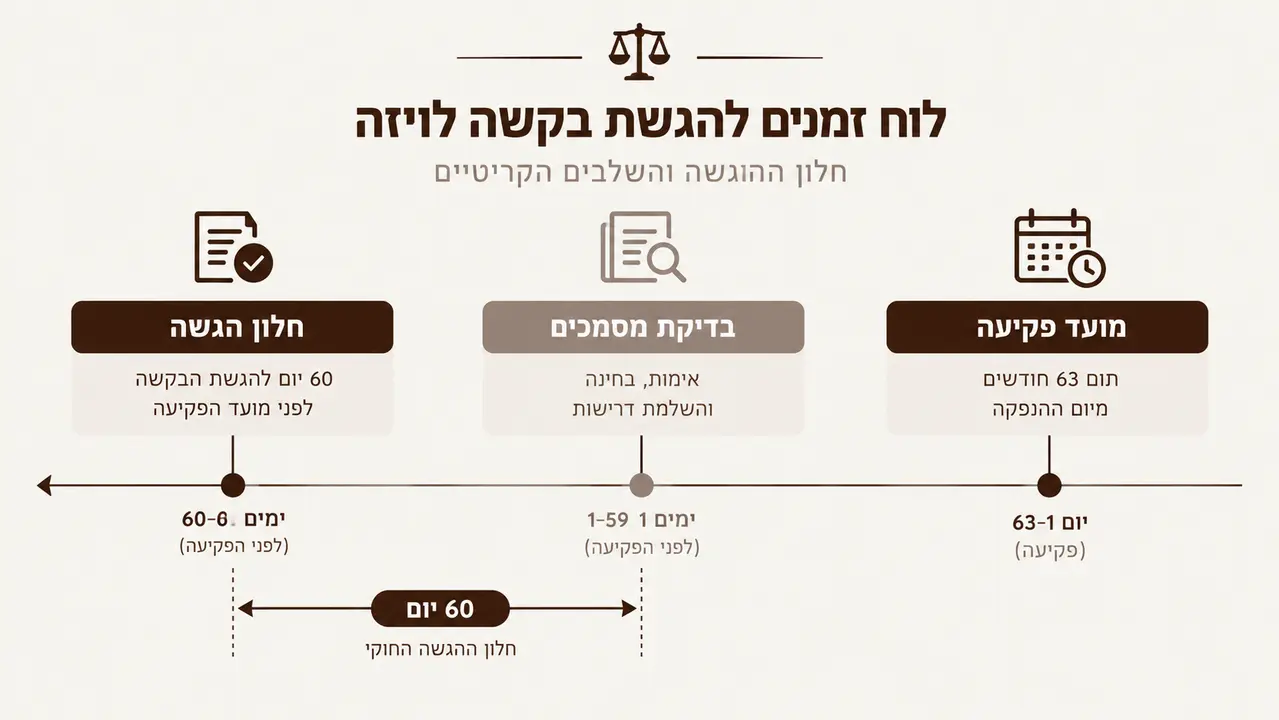
- The application is filed within a window of 60 days before the visa expires. Filing too early or too late may lead to refusal or deportation.
- The burden of proving irreversible health damage rests on the patient, who proves it with a detailed opinion from a geriatric specialist.
- While the application is under review, the worker receives a temporary B/1 license that protects them from removal from Israel.
- Rejection of the application is not the end of the road. The family can file an appeal with the Appeals Tribunal and then an administrative petition with the District Court.
What is a humanitarian visa for a caregiver and when must you apply for one?
When an 82-year-old patient wakes up in the morning and recognizes no one except his caregiver, any change in routine may cause his medical condition to deteriorate rapidly. When the foreign worker’s work visa is about to expire, the only legal way to keep him in Israel is to file an application for a humanitarian visa for a caregiver, to be reviewed by the Advisory Committee of the Population and Immigration Authority. This procedure allows an exception to the standard rules of stay under the Entry into Israel Law, which limit regular employment to a period of 51 months with technical extensions up to 63 months. This exceptional relief is granted only in rare cases where a unique caregiving bond has been proven and irreversible harm would result if it were broken.
The decision to pursue this route determines whether the patient remains in familiar surroundings or suffers a severe functional decline due to the departure of the person caring for him. This guide sets out the Committee’s criteria, the required legal conditions and the precise steps to take before the immigration authorities in order to protect the patient’s well-being.
What does the 63-month limit in the Entry into Israel Law mean?
Section 3A(b1) of the Entry into Israel Law sets a maximum stay of five years and three months for foreign workers in all sectors of the economy. The legislature defined the 63-month period as an upper limit intended to prevent foreign workers from settling permanently in Israel. However, the legislature recognized that the caregiving sector differs from every other sector of employment because of the human dependence that develops between patient and caregiver.
Time works against the family.
This is where the track of the 63-month humanitarian caregiving visa comes in, designed to allow an exception to the general limit in particularly severe medical cases. The application does not extend the visa automatically. It requires individual approval by the Minister of Interior or the Director General of the Authority after receiving a recommendation from the Advisory Committee.
Who may apply to the Humanitarian Committee in the caregiving sector?
The right to file the application belongs to the patient himself, who holds a valid employment permit from the Caregiving Division of the Population Authority. Where the patient is not legally or cognitively competent to sign documents, a first-degree relative or an appointed guardian may act on his behalf under an appropriate power of attorney. A lawyer representing the family files the case directly with the Committee’s secretariat in Jerusalem, in accordance with the requirements for license extensions in the caregiving sector on humanitarian grounds at the Population and Immigration Authority.
The foreign worker cannot initiate the application for himself without the patient. Even where the worker wishes to remain in Israel, the application is always examined solely from the perspective of the Israeli patient and his medical needs.
Can the application be filed before the worker has completed 63 months in Israel?
The Advisory Committee summarily rejects applications filed too early, before the worker has reached the maximum period of stay set by law. The government procedure provides that the family must file the application within the window of 60 days preceding the expiry of the worker’s 63-month visa. Filing early results in immediate refusal on the grounds that the worker has not yet exhausted his regular lawful period of stay in Israel.
But filing late, after the visa has expired, is far more dangerous and exposes the worker to immediate deportation. That is why our firm plans the timeline months in advance and gathers the medical opinions before the filing window opens.
What is the difference between a special caregiving visa and a humanitarian visa?
Many families use the term special caregiving visa as a general label for any exceptional procedure at the Population Authority. In practice, the law distinguishes between the periodic renewal of a regular B/1 work license and a visa granted on special humanitarian grounds. The regional offices renew a regular license each year as long as the worker has been in Israel for less than 51 months, or up to 63 months with the same household.
By contrast, the humanitarian track is intended for crossing the 63-month threshold and requires passing through an interministerial committee in Jerusalem. It is a complex legal proceeding that requires proof of actual health damage, not a routine administrative registration.
What is the regular administrative route for extending a foreign caregiver’s stay?
In the first years of the caregiver’s employment, a licensed private agency for placing foreign workers handles the foreign caregiver stay extension process. The family must hold a valid employment permit from the Population Authority, present continuous medical insurance and pay the annual government fee. As long as the worker has been in Israel for less than 51 months, the license is extended as a matter of routine without the need for exceptional proof.
When the worker has been employed continuously by the same patient for more than 51 months, his license is extended up to the 63-month ceiling in the same manner. This stage does not require the involvement of a special committee, only compliance with the requirements of the updated Population and Immigration Authority procedure for the caregiving sector.
Conditions and criteria for obtaining a special caregiving visa
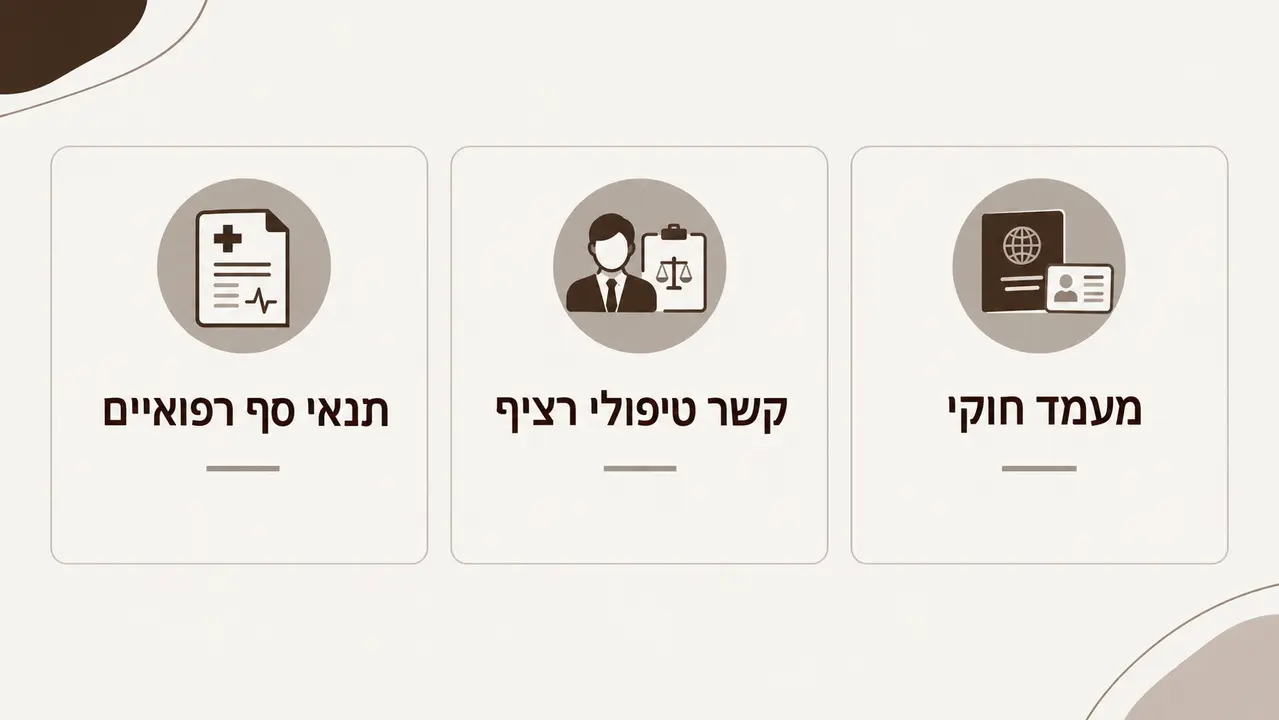
The Advisory Committee to the Minister of Interior does not operate as a general relief mechanism. It examines each case according to very strict tests. The legal burden of proving exceptional circumstances rests entirely on the patient and his family, who must show that replacing the caregiver would lead to an actual medical crisis. Refusal decisions usually state that the patient can adjust to a replacement caregiver.
To overcome this hurdle, the case must include a precise factual foundation combining medical records, professional opinions and evidence of the unique caregiving bond that has developed over the years.
Threshold conditions regarding the patient and the caregiving bond
The Population Authority requires a significant, continuous period of care by the caregiver for the same patient before the application is filed, usually at least one year. The patient must be in a severe long-term care condition with complete dependence on others according to the assessment tests of the National Insurance Institute. The Committee examines whether the patient has complex characteristics such as advanced dementia, Alzheimer’s, acute cognitive decline or a severe physical disability that prevents normal communication.
It must also be proven that breaking the caregiving bond would cause the patient irreversible mental or physical harm that a new worker could not bridge.
Threshold conditions regarding the foreign caregiver and his legal status in Israel
The foreign worker must be lawfully present in Israel when the application is filed, with no past periods of unlawful stay. The worker must hold a foreign passport valid for at least two years and have no criminal record or security impediments in Israel or in his country of origin. The Entry into Israel Law also limits the total length of a foreign worker’s stay in Israel, so workers who have stayed more than eight years find it difficult to obtain an exceptional approval.
Filing the application on time freezes removal proceedings and grants the caregiver a temporary stay visa until a final decision is made in the case.
Comparison of stay and employment tracks in the caregiving sector
To help families understand their legal position, the table below summarizes the key differences between the various stages of employing foreign caregivers in Israel.
The data in the table illustrate the sharp shift from a simple administrative procedure to a legal battle requiring thorough preparation of evidence and professional opinions.
Medical threshold criteria for assessing the patient’s dependence on the foreign worker
The Humanitarian Committee is not satisfied with a standard letter from a health fund family doctor. Experience shows that committees reject applications supported by general medical records that do not describe the caregiving dynamics within the home. The case must include a comprehensive functional assessment by a specialist geriatrician, psychogeriatrician or neurologist who treats the patient regularly. The specialist must expressly address the expected medical and psychological consequences if the caregiver is replaced by a stranger.
The opinion should detail unique communication difficulties, dangerous behaviors, a history of falls or the patient’s extreme anxiety in the presence of people he does not know well.
The procedure for applying to the Interministerial Humanitarian Committee
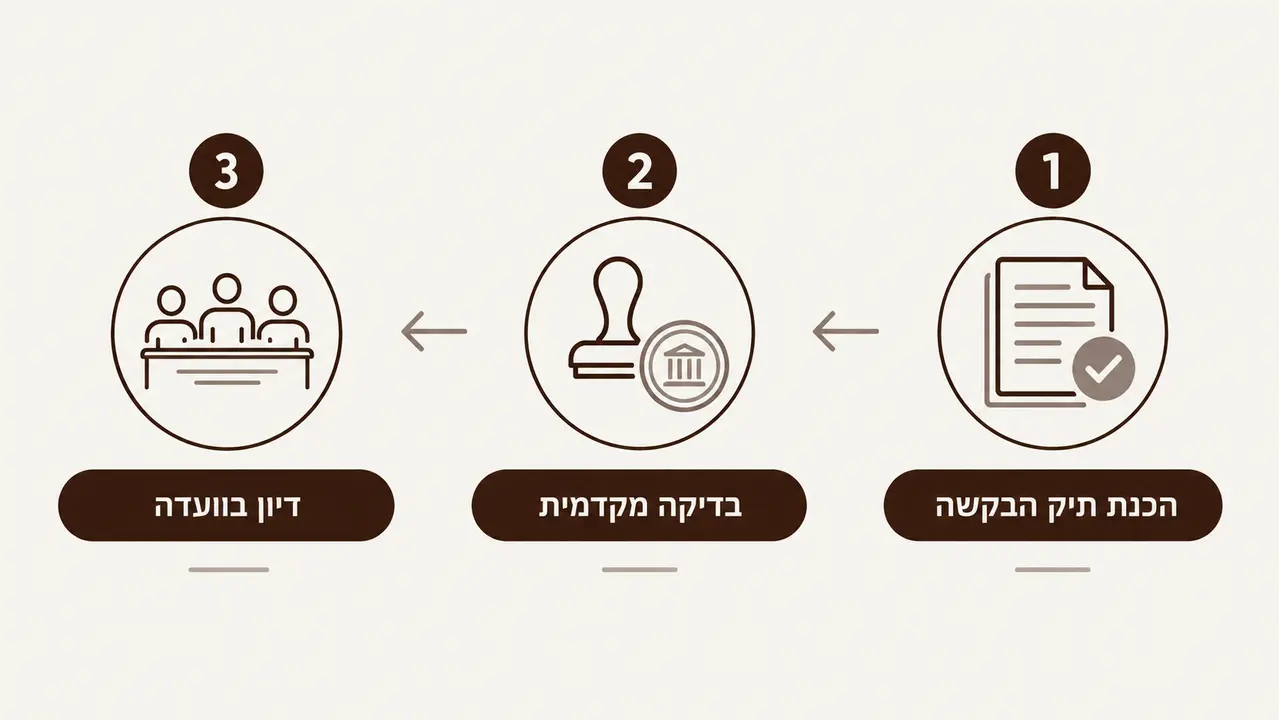
The case is filed with the service center of the Caregiving Division at the Population and Immigration Authority in Jerusalem, together with official forms, signed affidavits and a government application fee. The Committee’s secretariat conducts a preliminary review of the threshold conditions, and if documents are missing the case may be rejected immediately without a substantive hearing. Once the case passes the preliminary review, it is forwarded to the members of the Advisory Committee, which includes representatives of the Ministry of Health, the Ministry of Welfare and the Population Authority.
The Committee meets behind closed doors, reviews the documents and formulates a reasoned recommendation that is submitted for decision to the Director General of the Authority or the Minister of Interior.
The documents and evidence needed to build a solid humanitarian case
Building a successful case requires carefully gathering legal and medical documents that leave no room for doubt about the need for the caregiver. The main documents include an official application form for a license extension on humanitarian grounds, a medical confidentiality waiver and an affidavit of the patient or his family signed before a lawyer. In addition, a comprehensive social report is required from a social worker who knows the family unit and describes daily life in the home.
A detailed personal letter from the family describing concrete everyday incidents is a critical element in conveying the human distress to the Committee members.
The caregiver’s status during the review period and the issuance of digital visas
Once the application has been entered into the system and found to meet the threshold conditions, the foreign worker is entitled to a temporary B/1 stay and work license that protects him from removal from Israel. This license allows the caregiver to continue working lawfully for the same patient until the Committee’s final decision. As of January 1, 2025, the Population Authority has moved to issuing electronic, digital-only work licenses instead of the stickers previously affixed in passports.
The digital license is sent as a file directly to the private agency and the employer, and it constitutes full legal proof for all purposes before the enforcement authorities in Israel.
What happens when a foreign worker moves between patients?
The basic legal rule is that a humanitarian visa is always granted for one specific patient only and cannot be transferred to another patient. If the patient passes away or moves to a nursing facility, the visa expires immediately and the foreign worker must leave Israel. In addition, Population Authority procedures divide Israel into three geographic regions to prevent patients in outlying areas from being abandoned in favor of work in central Israel.
A worker’s move between patients during the 63-month period is subject to strict regional restrictions, and failure to comply with them may cost him his legal status in Israel.
Which common mistakes cause humanitarian caregiving applications to be rejected?
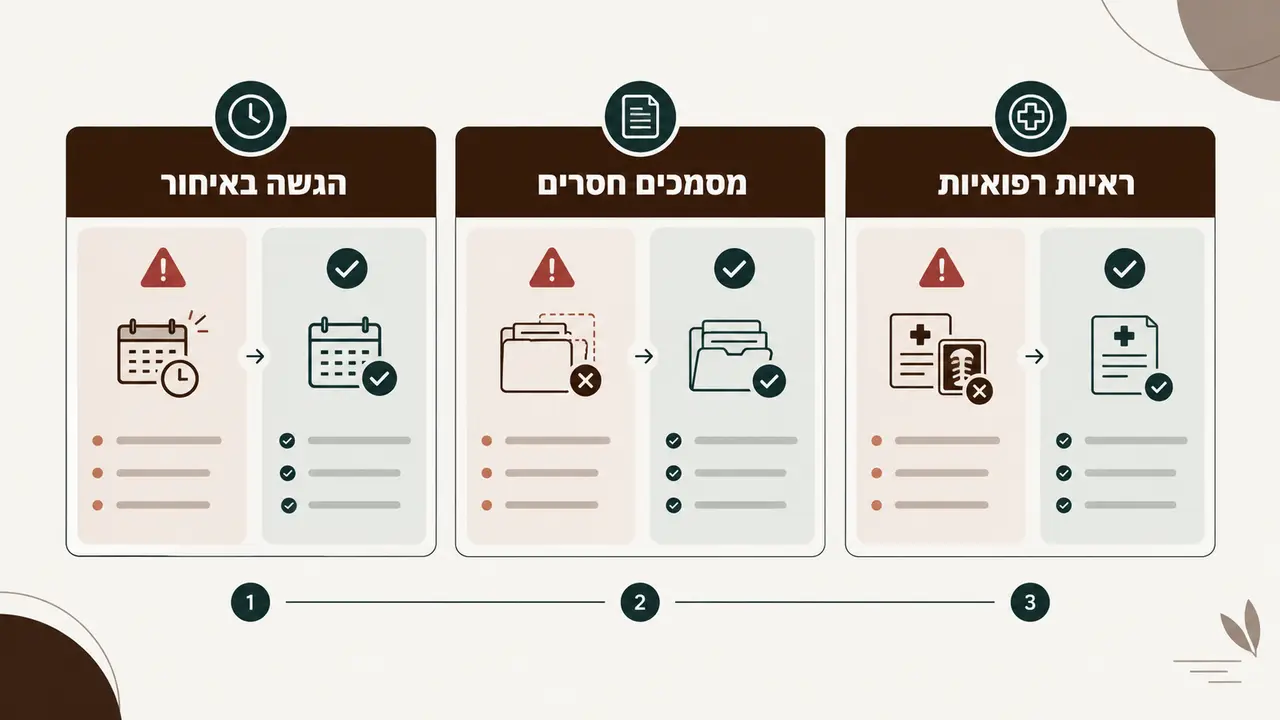
The most common mistake families make is waiting until the last moment and filing the application just a few weeks before the visa expires, or after it has expired. Late filing leads to summary rejection and possible arrest of the caregiver by inspectors of the Foreigners Enforcement Unit. Another common mistake is relying on brief discharge summaries from the health fund instead of submitting a detailed opinion from a geriatric specialist analyzing the direct consequences of replacing the caregiver.
A drafting error leads to deportation.
Filing general affidavits without factual detail of the care routine also weakens the case and leads to quick rejection without an opportunity to correct the documents.
Rejection of the application: main reasons and legal courses of action
When the Advisory Committee rejects an application, the Ministry of Interior issues a refusal letter and gives the worker a short period of 21 to 30 days to leave Israel. The most common reasoning in these decisions is that no exceptional humanitarian grounds were proven to justify a departure from the general policy against foreign workers settling in Israel. In this situation the family experiences great anxiety in the face of the immediate threat that care for their loved one will be cut off.
A refusal decision is not the end of the road.
The law allows the Authority’s decision to be challenged by filing a reasoned objection or by applying immediately to the competent judicial bodies, within the time limits set by legislation.
How do you file an appeal with the Appeals Tribunal under the Entry into Israel Law?
The first judicial stage after a final refusal is filing a notice of appeal with the Appeals Tribunal, which operates under Section 13C of the Entry into Israel Law. The appeal must be filed within 30 days of receiving the refusal notice, together with affidavits and legal evidence. Alongside the appeal, our firm files an urgent motion for an interim order staying the foreign worker’s removal from Israel, to ensure that he can continue staying in the patient’s home during the proceedings.
The Tribunal examines whether the Authority considered all the medical evidence, whether it acted fairly and whether its decision was reasonable and proportionate in the circumstances, as established in the deliberations reflected in the Knesset Committee notice that addressed license extensions for caregivers.
When does an administrative petition to the District Court become the right remedy?
If the Appeals Tribunal dismisses the appeal, the next step is filing an administrative petition with the District Court sitting as a Court for Administrative Affairs. This petition addresses substantive legal errors in the Appeals Tribunal’s judgment or serious administrative defects in the Authority’s conduct. The District Court examines whether the patient’s right to be heard was violated and whether extraneous or unreasonable considerations were taken into account when the case was rejected.
At this stage, extensive litigation experience and in-depth knowledge of case law are needed to overturn administrative refusal decisions and protect the human dignity of the patient.
A practical scenario: sudden deterioration in the patient’s condition
Reuven, an 84-year-old living in Ramat Gan, suffers from dementia and advanced Parkinson’s and has been cared for over five years by a devoted caregiver from Nepal named Ram. Two months before the end of the 63-month period, Reuven suffered a sudden cognitive decline and began to have severe anxiety attacks every time Ram left his room. The family tried to bring in a replacement caregiver for an overlap period, but Reuven refused to accept food or medication from him and sank into a deep depression.
At this point the family turned to our firm, and within seven days our team obtained an urgent psychogeriatric opinion confirming that breaking the bond would create a real danger to his life. We filed an urgent application with the Humanitarian Committee in Jerusalem, together with video and photographic documentation and medical records, and the Authority granted a temporary stay visa that prevented Ram’s departure from Israel.
Why is it essential to retain a lawyer specializing in immigration and caregiving matters?
Dealing with the Ministry of Interior and its committees requires a high level of professional skill that most people, forced to cope with complex bureaucracy at a time of crisis, do not have. Applying on your own without a proper evidentiary foundation may lead to an irreversible refusal that closes the door to appellate review. Zari Hazan & Co. has practiced immigration and status law in Israel for more than 20 years from its offices at 150 Menachem Begin Street in Tel Aviv.
The firm analyzes the patient’s medical profile, guides the family in obtaining the necessary opinions and drafts solid legal arguments consistent with current case law tests.
Mapping legal needs and the solutions of Zari Hazan & Co.
The following table shows how our firm provides targeted solutions to the main problems that arise in handling humanitarian applications in the caregiving sector.
The firm’s cumulative experience in handling hundreds of cases before the Ministry of Interior enables us to identify weak points in a case in advance and correct them before they become grounds for refusal.
Frequently asked questions about humanitarian caregiver visas
Below are answers to key questions that families and patients frequently ask us while the procedure is pending before the Population and Immigration Authority. Click on each question to open and read the detailed answer.
May the caregiver be employed while the application is pending before the Committee?
Yes, provided that the application has been officially received by the Ministry of Interior and the worker has been issued a temporary B/1 license to stay and work for the same employer. Employment without a valid temporary visa exposes the employer to heavy administrative fines and criminal prosecution under the Foreign Workers Law. We therefore make sure the temporary license is renewed continuously until a final decision is made.
What should you do when the foreign worker’s passport is about to expire?
The Humanitarian Committee does not approve applications if the worker’s passport has less than two years of validity remaining. The family should contact the embassy in Israel of the caregiver’s country of origin well in advance to extend the passport or obtain a new one. The updated passport documents are submitted directly to the application file at the Ministry of Interior to avoid delays in the decision.
Can a new application be submitted to the Committee after a refusal?
A repeat application, known as a request for reconsideration, will be heard only if there has been a material, factual change in circumstances that did not exist when the previous decision was made. Such a change may be an acute medical deterioration, a prolonged hospitalization or a new medical diagnosis supported by an updated opinion. The same application resubmitted without new evidence will be summarily rejected within a few days.
Who bears the fees and costs of the procedure?
Israeli law strictly prohibits collecting money from the foreign worker for government fees or legal costs related to regularizing his status. All payments for the Committee’s file-opening fee and the costs of legal representation are borne entirely by the patient and his family. Collecting money from the caregiver may lead to revocation of the employer’s employment permit.
How do you preserve continuity of care and protect the patient’s rights?
When the health and well-being of a loved one depend on the presence of a devoted and familiar caregiver, is it wise to wait until the last moment and risk the caregiving bond being broken at the most critical time?
Seeking legal advice early makes it possible to assess the application’s prospects, gather the right medical documents and file a well-founded case that will protect your rights before the authorities. Zari Hazan & Co. invites you to a personal, professional consultation to review your case. Call us at 03-3851361 or contact our office for prompt and precise legal assistance.
About the Author

Adv. Zari Hazan
Founding Partner
Adv. Zari Hazan is a founding partner of Zari Hazan & Co., established in 2004 and specializing in entry into Israel law, stay visas and foreign workers, administrative law and human rights. His extensive experience includes representation and advocacy before a wide range of forums, from the Appeals Tribunal to the Supreme Court.
LL.B. from the Interdisciplinary Center Herzliya · Member of the Israel Bar Association since 2004 · Chair of the Immigration and Foreign Workers Committee of the Israel Bar Association · Served as a judge at the Player Status Institution of the Israel Football Association (2013 to 2024)